What is the difference between PS and HIPS thermoforming materials?
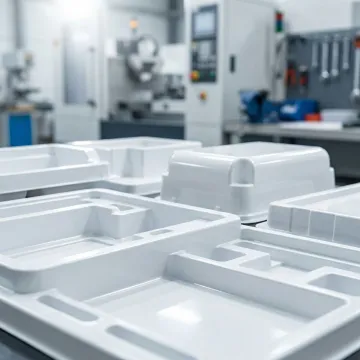
Polystyrene (PS) is a rigid, cost-effective plastic with excellent clarity and smooth surface finish, ideal for packaging, displays, and low-impact applications. High-Impact Polystyrene (HIPS) is a toughened grade of PS with added rubber polymers, offering significantly improved impact resistance and durability while maintaining good dimensional stability and ease of processing. HIPS is preferred for industrial enclosures, machine guards, and protective housings where mechanical strength is critical. Our team evaluates your application requirements—including impact demands, environmental exposure, and budget—to recommend the optimal material grade for your thermoformed parts.
How quickly can you produce thermoformed prototypes?
We specialize in rapid prototyping using low-cost wood or polyurethane tooling that can be CNC-milled to your exact specifications. Depending on part complexity and design requirements, we can often produce a master pattern and deliver initial prototypes within just a few weeks. This accelerated timeline allows you to review fit, function, and aesthetics early in the development process and make design adjustments before committing to production aluminum tooling. Our fast turnaround helps you meet tight project deadlines and reduce time-to-market for new products.
What is the minimum and maximum part size you can thermoform?
Our eight thermoforming machines range in size from 2'x3' up to 5'x9', giving us exceptional flexibility to produce both small precision components and large-format parts. Whether you need compact medical device housings, mid-sized industrial enclosures, or expansive telecommunication radomes, we have the equipment capacity to handle your project. Our team will work with you during the design phase to optimize part geometry and tooling layout for the best combination of quality, material efficiency, and production cost.
Do you offer CNC trimming and secondary operations?
Yes, we provide comprehensive CNC trimming and fabrication services using two advanced 5'x10' CNC trimming centers. After thermoforming, we perform precision routing, contour cutting, edge finishing, drilling, and fastener preparation to bring parts to final drawing specifications. We also offer secondary operations including heat bending, bonding, riveting, threaded insert installation, and assembly to deliver finished, ready-to-install components. This full-service capability eliminates the need for multiple vendors and ensures consistent quality control throughout the manufacturing process.
What industries do you serve with custom thermoformed parts?
Hill Plastics has served a diverse range of industries since 1977, including aerospace and aviation, telecommunications, medical devices and healthcare, industrial equipment and OEM manufacturing, defense and military, point-of-purchase and retail display, marine, electronics and electrical equipment, oil and gas energy, and transportation and logistics. Our experience across these sectors gives us unique insight into industry-specific material requirements, regulatory standards, and performance expectations, enabling us to deliver thermoformed solutions that meet rigorous application demands and compliance criteria.
Can you handle high-volume production runs?
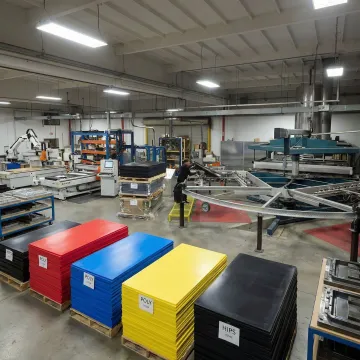
Absolutely. We have the facility space, equipment, and experienced staff to scale from prototype quantities to high-volume production of thousands of parts. Our 4'x7' rotary thermoforming machine features cycle times that are 2.5 times faster than standard single-station equipment, enabling cost-effective, high-speed production without compromising quality. Every production part undergoes rigorous quality control for appearance and dimensional compliance. We also offer competitive pricing structures for volume orders, helping you achieve economies of scale while maintaining consistent part quality.
What is your tooling and mold-making process?
We use advanced CAD software (SolidWorks) and CNC machining to create custom tooling tailored to your part design. For prototyping and pre-production, we typically build low-cost wood or polyurethane master patterns that allow for quick design iterations and adjustments. Once your design is approved, we use the master pattern in an aluminum casting process to create durable production molds capable of running thousands of cycles. This phased approach minimizes upfront investment, accelerates prototype delivery, and ensures production tooling is optimized for dimensional accuracy and long-term durability.
How do you ensure quality control throughout the manufacturing process?
Quality is embedded at every stage of our workflow. We begin with design review and material selection assistance to ensure manufacturability and performance. During production, our custom quality control system monitors progress as parts pass through forming, trimming, and finishing operations. We inspect parts for dimensional accuracy against print specifications, surface finish quality, and functional requirements. Our experienced team—many with over 20 years of tenure—applies industry best practices and rigorous inspection protocols to deliver consistent, high-quality thermoformed components that meet or exceed your expectations on every order.