What types of energy hardware components can you manufacture?
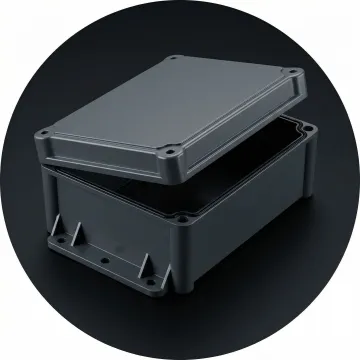
We manufacture a comprehensive range of custom plastic components for the energy sector including equipment enclosures, protective housings, machine guards, radome covers, instrument panels, control box housings, cable management trays, and custom OEM parts. Our capabilities serve oil & gas operations, renewable energy installations, power generation facilities, and electrical equipment manufacturers. Using materials selected for chemical resistance, UV stability, and thermal performance, we produce components from prototype through high-volume production runs with precision CNC trimming and assembly operations.
Which materials are best suited for energy sector applications?
Material selection depends on your specific operational environment and performance requirements. For corrosive oil & gas environments, we recommend HDPE for excellent chemical resistance. High-temperature applications benefit from specialized high-temp ABS formulations. Outdoor renewable energy installations require UV-resistant ASA/ABS to prevent degradation from sunlight exposure. PETG offers superior impact resistance for protective housings. Our engineering team evaluates factors including operating temperature range, chemical exposure, impact requirements, tensile strength needs, and environmental conditions to recommend the optimal material for your energy hardware application, ensuring long-term durability and performance.
What is your typical lead time for energy hardware components?
Lead times vary based on project complexity and production volume. For prototypes using low-cost wood or polyurethane tooling, we typically deliver initial parts within 3-4 weeks from design approval. Production tooling using aluminum casting adds 4-6 weeks depending on complexity. Once tooling is complete, production runs scale efficiently—our rotary thermoforming equipment operates at cycle times 2.5 times faster than standard machines, enabling rapid fulfillment for high-volume orders. We work closely with your project timeline to provide accurate schedules during the quoting process and maintain transparent communication throughout production.
Can you help with design and material selection for our energy application?
Absolutely. Our sales and engineering team provides comprehensive design assistance and material selection consultation as a core part of our service. We analyze your application requirements—including operational environment, performance specifications, regulatory compliance needs, and budget constraints—to recommend optimal materials and tooling approaches. Using SolidWorks CAD software, we can refine designs for manufacturability, suggest modifications to reduce costs or improve function, and create detailed prototypes for validation testing. This collaborative process ensures your energy hardware components are optimized for both production efficiency and real-world performance before committing to production tooling.
Do you offer prototyping services before full production?
Yes, prototyping is a critical step we strongly recommend for all energy hardware projects. We produce functional prototypes using low-cost wood or polyurethane tooling that accurately represents the final part geometry. This approach allows you to physically evaluate fit, function, and design before investing in production-grade aluminum tooling. Prototypes typically deliver within weeks, enabling rapid design iteration and validation. You can test prototypes in actual operating conditions, verify dimensional accuracy, assess aesthetic appearance, and identify any necessary modifications. Once prototypes are approved, we use the master pattern in our aluminum casting process to create durable production molds.
What quality control measures ensure component reliability?
Quality is monitored throughout our entire manufacturing process from design review to finished product delivery. Our custom quality control system tracks production as it passes through all fabrication stages—thermoforming, CNC trimming, secondary operations, and final inspection. All production parts are verified against print specifications for dimensional accuracy, evaluated for surface finish and appearance, and checked for proper assembly of fasteners, inserts, or bonded components. With 45 years of OEM manufacturing experience and staff averaging 20+ years tenure, we maintain rigorous standards that have earned the confidence of major energy sector manufacturers who depend on component reliability in critical applications.
Can you handle both small prototype runs and large-scale production?
Yes, our facility and equipment are specifically configured to support projects from initial prototype through high-volume production. For prototyping and short runs, we use cost-effective tooling methods that enable economical quantities without sacrificing precision. For large-scale production, our 4'x7' rotary thermoforming machine delivers cycle times 2.5 times faster than conventional equipment, while our 20,000 square feet of manufacturing space provides capacity for thousands of units. Eight thermoforming machines ranging from 2'x3' to 5'x9' offer flexibility to match production volume with optimal equipment, ensuring competitive pricing whether you need 10 prototypes or 10,000 production components.
What secondary operations and finishing services do you provide?
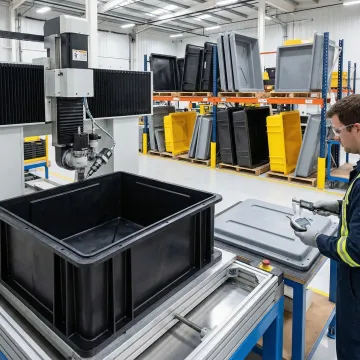
Our comprehensive fabrication capabilities include extensive secondary operations performed in-house for turnkey component delivery. Services include precision CNC trimming to exact specifications, precision drilling for mounting holes and ventilation, heat bending for complex geometries, bonding and welding of multi-part assemblies, riveting and mechanical fastener installation, threaded insert installation for assembly points, edge finishing and deburring, and custom assembly operations. With two 5'x10' CNC trimming centers and skilled fabrication staff, we deliver components ready for immediate integration into your energy hardware systems, eliminating the need for multiple suppliers and reducing your project coordination complexity.