What is drape forming used for?
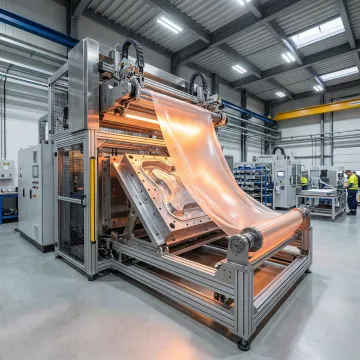
Drape forming is used to create large-format plastic parts with complex curves and contours by heating thermoplastic sheets and draping them over custom molds. This process is ideal for manufacturing custom enclosures, radome covers for telecommunications equipment, industrial protective housings, machine guards, point-of-purchase displays, medical device components, and aerospace parts. The drape forming technique excels at producing parts with excellent surface finish, consistent wall thickness distribution, and dimensional accuracy while keeping tooling costs significantly lower than injection molding—making it cost-effective for both prototype quantities and production runs ranging from dozens to thousands of units.
What are the techniques of plastic forming?
The primary plastic forming techniques include vacuum forming (thermoforming), where heated plastic is drawn onto a mold using vacuum pressure; drape forming, where heated sheets are draped over a mold and shaped by gravity and controlled pressure; pressure forming, which uses additional air pressure for enhanced detail; and twin-sheet forming for hollow parts. At Hill Plastics, we specialize in drape forming and vacuum thermoforming using eight machines ranging from 2'x3' to 5'x9', plus a high-speed 4'x7' rotary system. Each technique offers distinct advantages depending on part geometry, production volume, material selection, and surface finish requirements. Our engineering team helps customers select the optimal forming method for their specific application.
How much does custom plastic drape forming cost?
Custom drape forming costs vary based on part size, complexity, material selection, tooling requirements, and production volume. One significant cost advantage is our low-cost wood or polyurethane prototype tooling, which can be produced for a fraction of traditional mold costs—often just a few thousand dollars compared to tens of thousands for injection molds. This allows design validation and modifications before investing in production aluminum tooling. For production runs, economies of scale improve unit pricing significantly, especially with our high-speed rotary thermoforming equipment that operates 2.5 times faster than standard machines. Contact our sales and engineering team for a detailed quote based on your specifications, timeline, and quantity requirements—we'll provide competitive pricing that keeps your project on budget.
What materials can be used for drape forming?
Hill Plastics works with a comprehensive range of thermoforming materials including ABS (Acrylonitrile-Butadiene-Styrene) for impact resistance and surface finish, HDPE (High-Density Polyethylene) for chemical resistance and durability, PETG (Polyethylene Terephthalate Glycol) for clarity and toughness, high-temperature ABS grades for elevated operating environments, UV-resistant ASA/ABS formulations for outdoor exposure, decorative foil-laminated materials for aesthetic applications, polystyrene for cost-sensitive projects, and KYDEX for demanding industrial uses. Our engineering team evaluates your application requirements—including impact resistance, tensile strength, chemical exposure, environmental conditions, temperature ranges, and regulatory compliance—to recommend the optimal material that balances performance with cost-effectiveness for your specific drape forming project.
What is the typical lead time for drape-formed parts?
Lead times depend on project complexity and tooling requirements. For prototypes using low-cost wood or polyurethane tooling, we can typically deliver parts in just a few weeks—often 2-4 weeks depending on design complexity and our current production schedule. Production tooling using aluminum casting requires additional time for pattern creation and mold fabrication, usually 6-10 weeks total from design approval to first production parts. Once production tooling is complete, manufacturing lead times for ongoing orders are typically 2-4 weeks based on quantity and finishing requirements. Our quick turnaround capability and 20,000+ square foot facility allow us to accommodate both rush prototype projects and scheduled high-volume production runs efficiently. Contact us to discuss your specific timeline needs.
What size parts can Hill Plastics drape form?
Our eight thermoforming machines accommodate parts ranging from small 2'x3' components up to large 5'x9' (60" x 108") formats, providing exceptional flexibility for diverse applications. Our newest 4'x7' rotary thermoforming machine offers high-speed production for medium-to-large parts with cycle times 2.5 times faster than conventional equipment. This range allows us to manufacture everything from compact electronic enclosures and medical device housings to large telecommunications radome covers, industrial protective enclosures, and aerospace components. Material thickness capabilities span from thin-gauge decorative applications to heavy-gauge industrial parts. If your project requires special sizing or you're uncertain whether your part dimensions fit our equipment capacity, our engineering team can review your specifications and recommend the optimal manufacturing approach.
Can you modify existing drape forming tooling?
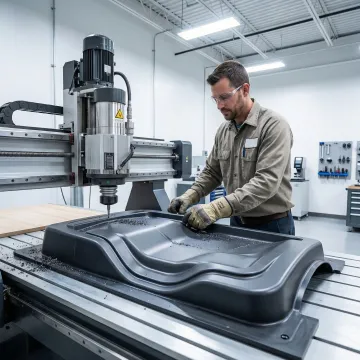
Yes, one of the key advantages of our wood master pattern approach for prototype tooling is the ability to make design modifications quickly and cost-effectively. If testing reveals needed changes to part geometry, wall thickness, mounting features, or other design elements, our CNC machining capabilities allow us to modify the wood pattern and produce revised prototypes without the expense of creating entirely new tooling. This iterative development process—review prototype, identify improvements, modify pattern, produce updated parts—ensures your design is optimized before committing to production aluminum molds. Even for existing production molds, we can often make adjustments or create modified tooling variants. Our engineering team will evaluate your modification requirements and recommend the most cost-effective approach to achieve your design goals.
What industries does Hill Plastics serve with drape forming?
Hill Plastics has served diverse industries for over 45 years, including aerospace and aviation (aircraft interior components, protective housings), telecommunications (radome enclosures, equipment covers, antenna housings), medical devices and healthcare (equipment enclosures, protective covers, sterilizable housings), industrial equipment and OEM manufacturing (machine guards, custom enclosures, control panel housings), defense and military (ruggedized protective components), point-of-purchase and retail display (custom merchandising fixtures), marine applications (corrosion-resistant housings), electronics and electrical equipment (protective enclosures), oil and gas/energy sector (durable industrial housings), and transportation and logistics equipment. Our material selection expertise, quality control standards, and manufacturing capabilities allow us to meet the specific regulatory, performance, and aesthetic requirements unique to each industry segment.