What materials are best for 5G antenna radomes?
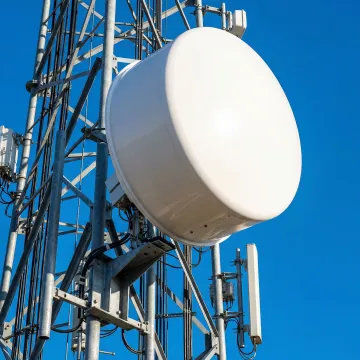
UV-resistant ASA/ABS and PETG are ideal materials for 5G radomes due to their excellent RF transparency, superior weatherability, and impact resistance. These materials maintain low dielectric constants across 5G frequency bands (including mmWave) while providing long-term UV stability and environmental durability. We evaluate your specific application requirements—including frequency ranges, environmental exposure, mounting systems, and budget—to recommend the optimal material formulation. Our engineering team can also provide material samples and work with your RF engineers to validate dielectric performance before production tooling.
How long does it take to manufacture custom 5G radomes?
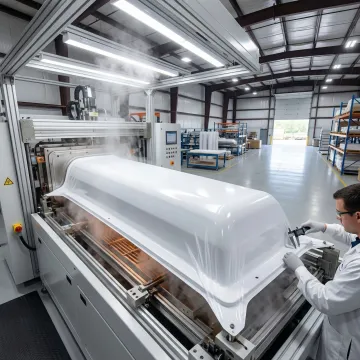
Prototype radomes can typically be produced in 3-4 weeks using low-cost wood tooling, allowing for design validation and RF testing. Once prototypes are approved, production aluminum tooling takes approximately 6-8 weeks to fabricate, after which full production runs begin. Our 4'x7' rotary thermoforming machine offers cycle times 2.5x faster than standard equipment, enabling rapid delivery of high-volume orders. Lead times vary based on complexity, size, quantity, and finishing requirements, but our 20,000 sq ft facility and experienced team ensure we meet aggressive deployment schedules for telecommunications projects.
Can you produce radomes for different 5G antenna configurations?
Yes, our custom thermoforming capabilities accommodate diverse 5G antenna geometries, from cylindrical and conical radomes for panel arrays to complex multi-faceted designs for beamforming systems. We manufacture radomes ranging from small sector antenna covers to large 5'x9' enclosures, with precision CNC trimming to create mounting flanges, cable entry points, and ventilation features to exact specifications. Our engineering team works with your mechanical and RF engineers to optimize radome geometry for signal performance, environmental protection, and ease of installation. We can also incorporate features like mounting bosses, threaded inserts, and weatherseals during fabrication.
What quality control measures ensure radome performance?
Every radome passes through our custom quality control system that monitors dimensional accuracy, material consistency, surface finish, and structural integrity at each production stage. We verify that wall thickness meets specifications for RF transparency, inspect all CNC-trimmed edges and mounting features against drawings, and ensure UV-resistant materials meet grade requirements. For critical telecommunications applications, we can provide material certification documentation, dimensional inspection reports, and coordinate third-party RF testing to validate dielectric properties. Our 45 years of experience manufacturing radomes for major providers like CommScope ensures production parts consistently meet industry standards.
Do you offer prototyping services before full production?
Absolutely. Rapid prototyping is a core service we provide to validate radome designs before production tooling investment. We create functional prototypes from low-cost wood or polyurethane molds that replicate final part geometry, allowing you to verify fit with antenna systems, conduct RF performance testing, and evaluate environmental durability. Prototypes are produced to drawing specifications with precision CNC trimming and can include all mounting features, fastener locations, and finishing details. If design modifications are needed based on testing results, we can quickly adjust the prototype tooling—a flexibility that's impossible with expensive production molds.
What is the typical cost for custom 5G radome manufacturing?
Radome pricing depends on size, complexity, material selection, tooling requirements, and production volume, but our thermoforming process offers significant cost advantages over alternative manufacturing methods like rotomolding or composite layup. Prototype tooling typically ranges from $2,000-$5,000 depending on part size, while production aluminum tooling costs $8,000-$15,000. Per-unit part costs decrease substantially with volume—our rotary thermoforming equipment enables competitive pricing for production runs from hundreds to thousands of units. We provide detailed quotes that include tooling, materials, CNC finishing, and any secondary operations like drilling, bonding, or hardware installation to give you complete project visibility.
Can radomes be customized with specific colors or finishes?
Yes, we offer various customization options including factory-colored materials in standard telecommunications colors (white, gray, beige) as well as custom color-matched formulations for brand-specific requirements. UV-resistant ASA materials are available in multiple colors with excellent long-term fade resistance for outdoor applications. We can also apply decorative foil laminates for specific aesthetic requirements. Surface finishes range from smooth gloss to textured matte depending on your preference and functional needs. All color and finish options are evaluated to ensure they don't compromise RF transparency or environmental durability critical for 5G antenna protection.
What industries and applications do your radomes serve?
While we specialize in telecommunications radomes for 5G networks, our manufacturing capabilities serve diverse industries including aerospace antenna systems, marine navigation equipment, weather radar installations, military communications, and IoT infrastructure. We've produced radomes for major telecommunications providers like CommScope and Antenna, as well as aerospace customers like Southwest Airlines and Enflite. Our experience spans small cell deployments, macro cell tower installations, distributed antenna systems (DAS), and specialized communication equipment requiring environmental protection with RF transparency. This cross-industry expertise ensures we understand the unique performance requirements and regulatory standards affecting radome design and manufacturing.