What types of plastic materials can Hill Plastics fabricate?
We work with a comprehensive range of thermoplastic materials including ABS (Acrylonitrile-Butadiene-Styrene), HDPE (High-Density Polyethylene), PETG (Polyethylene Terephthalate Glycol), high-temperature ABS, UV-resistant ASA/ABS, decorative foil laminated materials, polystyrene (PS), KYDEX, and specialty materials. Our sales and engineering team assists with material selection based on your specific application requirements, evaluating factors such as cost, impact resistance, durability, tensile strength, chemical resistance, and environmental conditions to recommend the optimal material for your project.
What is the typical turnaround time for custom plastic fabrication projects?
Turnaround times vary based on project complexity and production volume. For prototyping, we can typically produce a master pattern and initial prototypes in just a few weeks depending on design complexity. Our low-cost wood or polyurethane tooling expedites the prototype phase, allowing for quick design validation and modifications. For production runs, our 4'x7' rotary thermoforming machine offers cycle times 2.5 times faster than standard single-station equipment, enabling efficient high-volume manufacturing. We work closely with each client to establish realistic timelines that balance quality control with your schedule requirements.
Does Hill Plastics offer design assistance and engineering support?
Yes, our experienced sales and engineering team, including Brad Hill and Cody Hill, provides comprehensive product design assistance throughout your entire project. We help with initial concept development, proper tooling design recommendations, material selection optimization, and SolidWorks CAD design services. Whether you're bringing a fully developed design or just an initial concept, we transform your ideas into turnkey manufacturing solutions, ensuring the most cost-effective approach while maintaining the highest quality standards from design review through finished product delivery.
What industries does Hill Plastics serve with fabrication services?
We serve a diverse range of industries including aerospace and aviation, telecommunications, medical devices and healthcare, industrial equipment and OEM manufacturers, defense and military, point-of-purchase and retail display, marine applications, electronics and electrical equipment, oil and gas/energy, and transportation and logistics equipment. Our 45 years of experience has equipped us to handle the unique specifications, compliance requirements, and quality standards demanded by each sector, from precision radome enclosures for telecom to custom medical device components.
What are the advantages of thermoforming versus other plastic manufacturing methods?
Thermoforming offers several key advantages: significantly lower tooling costs compared to injection molding (wood or polyurethane molds for prototypes cost a fraction of steel injection molds), faster lead times for both tooling and production, cost-effective manufacturing of large parts relative to their size, excellent design flexibility allowing modifications during the prototype phase, and the ability to produce both small prototype quantities and high-volume production runs efficiently. Our vacuum forming process is particularly ideal for custom enclosures, radomes, displays, and industrial components where part size, design iteration, and production economics favor thermoforming technology.
Can Hill Plastics handle both prototype and high-volume production?
Absolutely. We have the facility space, equipment, and experienced staff to support your project from initial prototype through high-volume production of thousands of parts. For prototyping, we use low-cost wood or polyurethane tooling to quickly produce functional samples for design review and testing. Once approved, we transition to aluminum production tooling for long-run manufacturing. Our 4'x7' rotary thermoforming machine delivers cycle times 2.5 times faster than conventional equipment, and our eight thermoforming machines ranging from 2'x3' to 5'x9' provide the capacity and flexibility to scale production efficiently while maintaining competitive pricing.
What quality control measures does Hill Plastics implement?
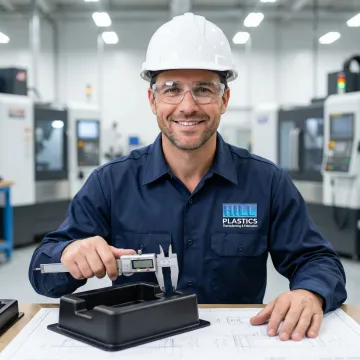
Quality control is integrated throughout our entire manufacturing process. We employ a custom quality control system that monitors production progress as it passes through all stages—from material selection and tooling through thermoforming, CNC trimming, and final assembly. Every production part is inspected for appearance and conformance to print specifications. Our CNC trimming centers ensure dimensional accuracy and repeatable precision, while our experienced staff with minimum 20-year tenures brings expertise-based quality oversight. We use SolidWorks for CAD design accuracy and CNC interface precision, ensuring finished products consistently meet your exact requirements.
What secondary operations and finishing services are available?
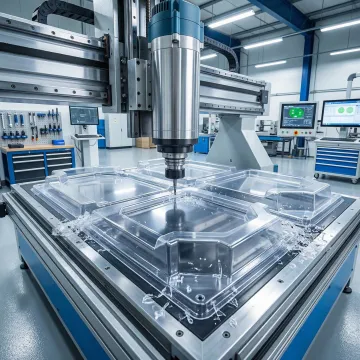
Beyond primary thermoforming and CNC trimming, we offer comprehensive secondary fabrication services including precision drilling, assembly operations, fastener installation, heat bending for contoured components, bonding and adhesive joining, riveting, threaded insert installation, edge finishing and deburring, and complete assembly of multi-component products. Our two 5'x10' CNC trimming centers handle both primary and secondary trim operations with exceptional accuracy. These capabilities allow us to deliver fully finished, assembly-ready parts that meet your exact specifications without requiring additional outside processing, streamlining your supply chain and reducing overall project costs.